English
 Spanish
 Portuguese

BMC HQ160-M CNC Copper busbar milling machineProductCNC Copper Aluminum Busbar M
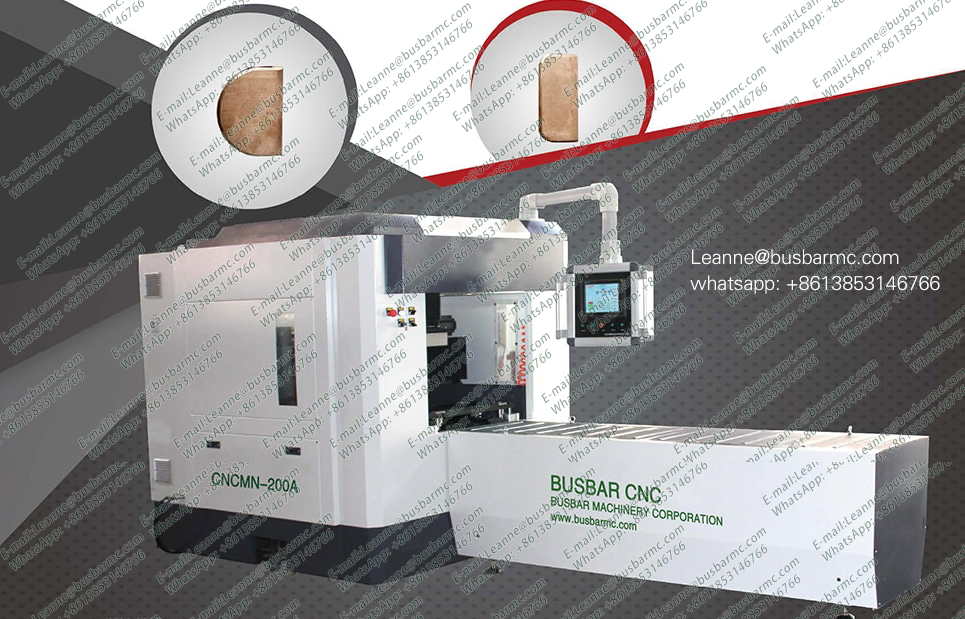
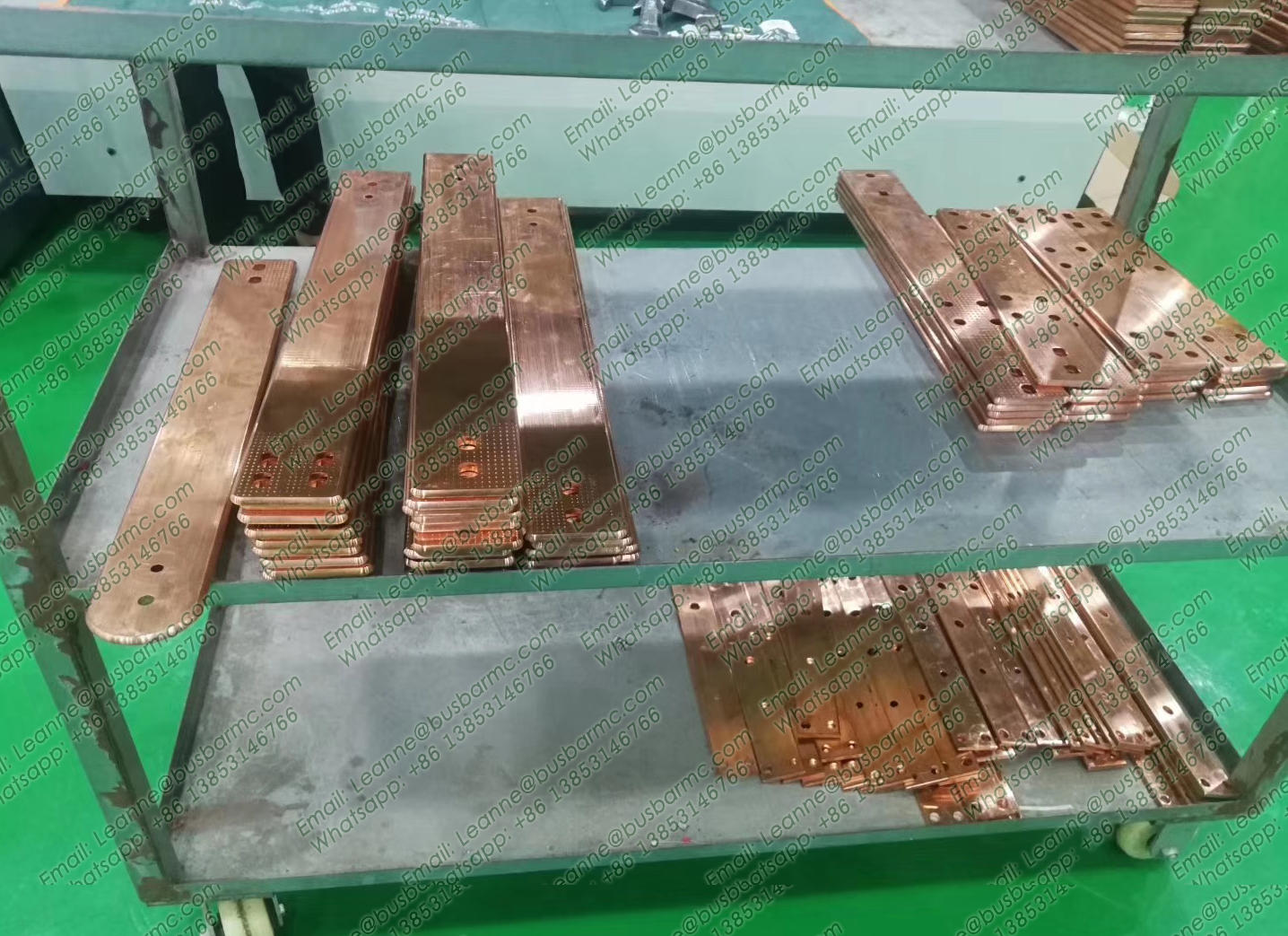
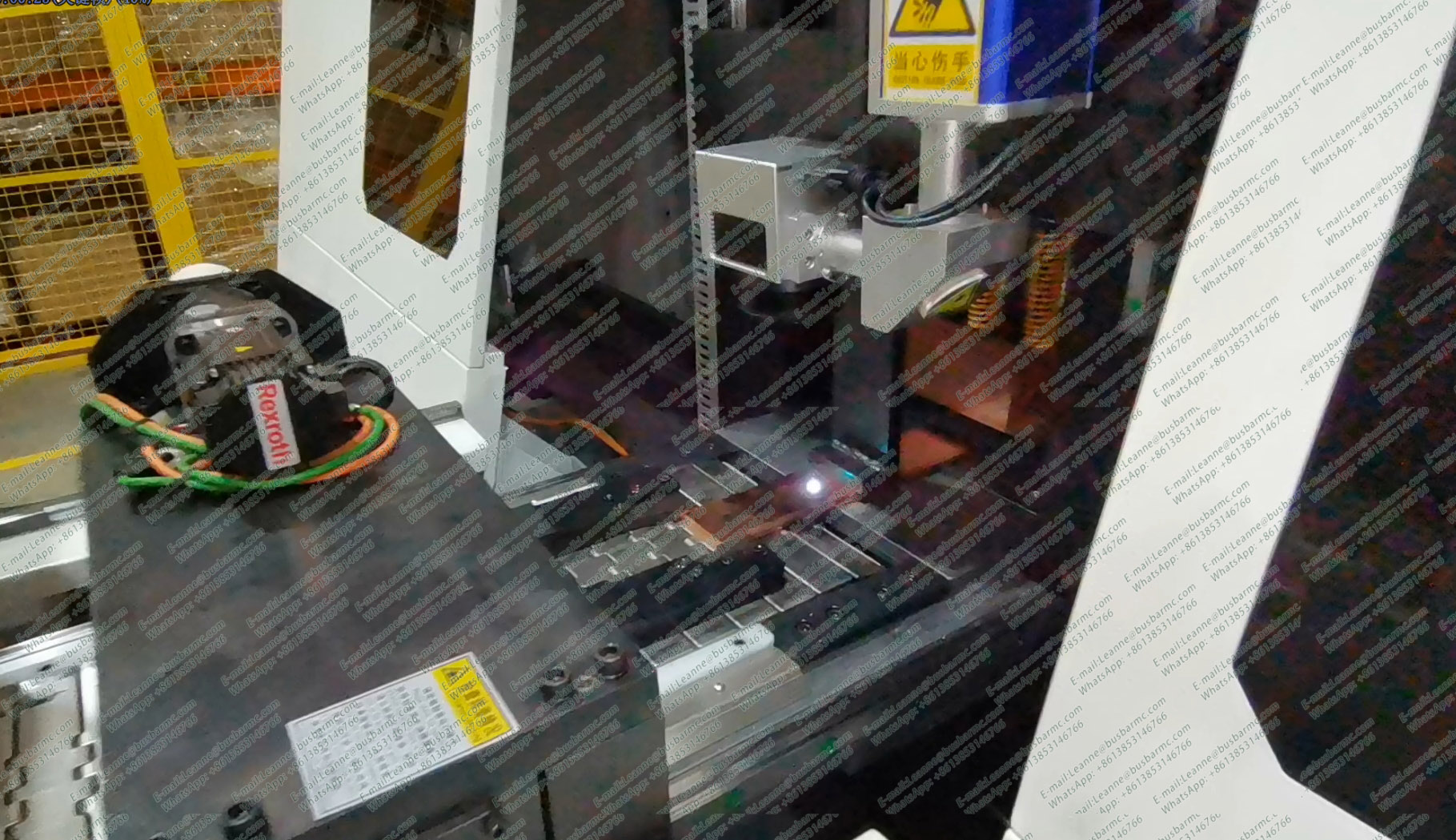
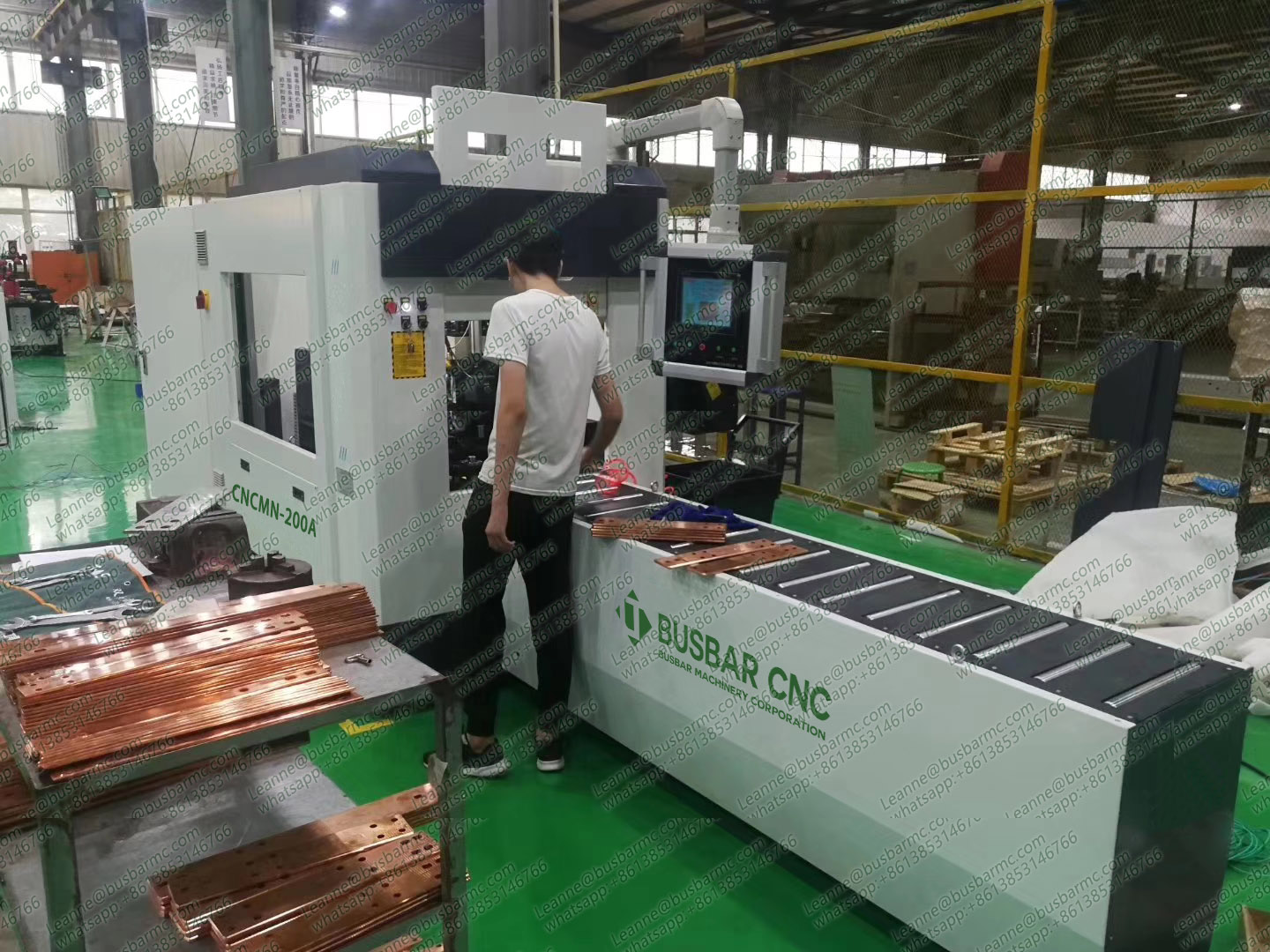
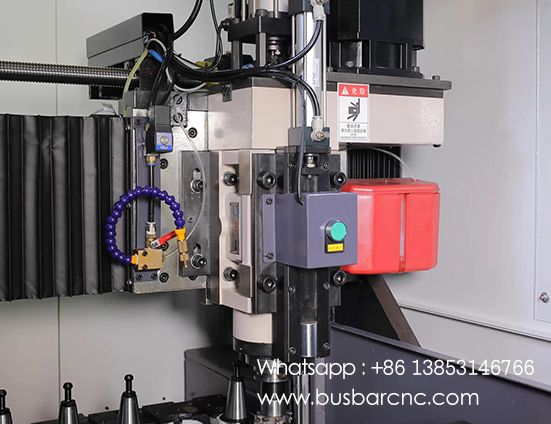
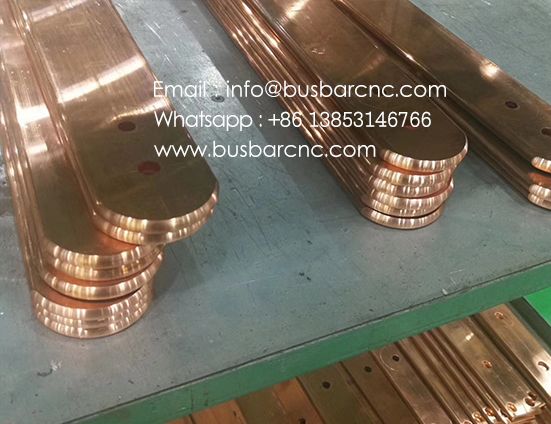
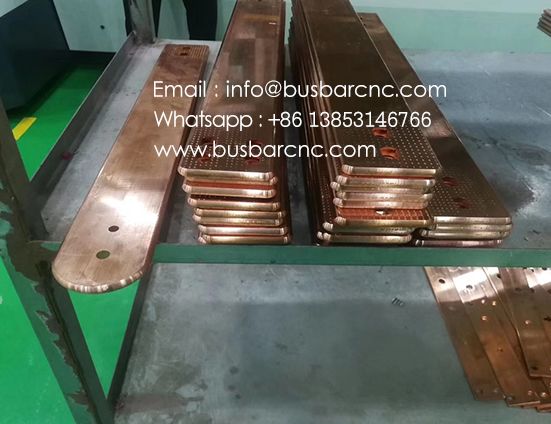
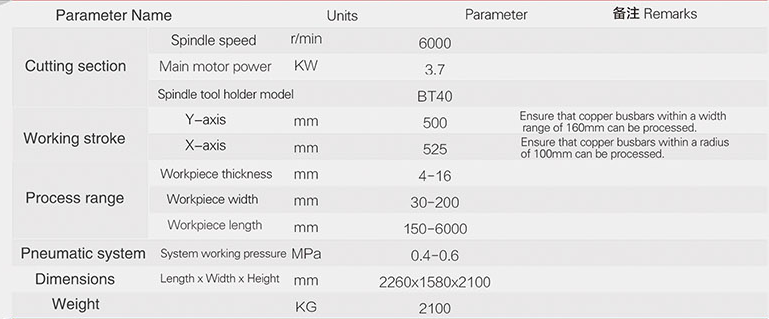
The CNCMN-200A is the CNC end-milling and chamfering machine to choose when the objective is to remove contact resistance at busbar joints, not merely to improve appearance. It mills corner arcs, chamfers and radius R on copper and aluminium busbars from 4 to 16 mm thick, 30 to 200 mm wide and 150 to 6,000 mm long. The spindle runs at 6,000 rpm with a 3.7 kW main motor, and a six-station in-line tool magazine gives automatic tool change on BT40 holders with 5-axis CNC control. Total installed power is 12 kW and the machine occupies 2,260 × 1,580 × 2,100 mm. Typical application: switchgear, electrical panels and substations.
Values per the model datasheet. Each paragraph is self-contained and states the test condition, the value and the comparison baseline.
Test condition: electrolytic copper bar of 4 to 16 mm thickness and 30 to 200 mm width clamped on the CNCMN-200A. Value: ±0.08 mm positioning accuracy on the X and Y axes and ±0.05 mm on the Z axis, with the spindle at 6,000 rpm. Comparison baseline: chamfering with an angle grinder or a file, which reproduces neither angle nor radius consistently between parts. Effect: the contact face becomes geometric and repeatable, which lowers the contact resistance of the joint.
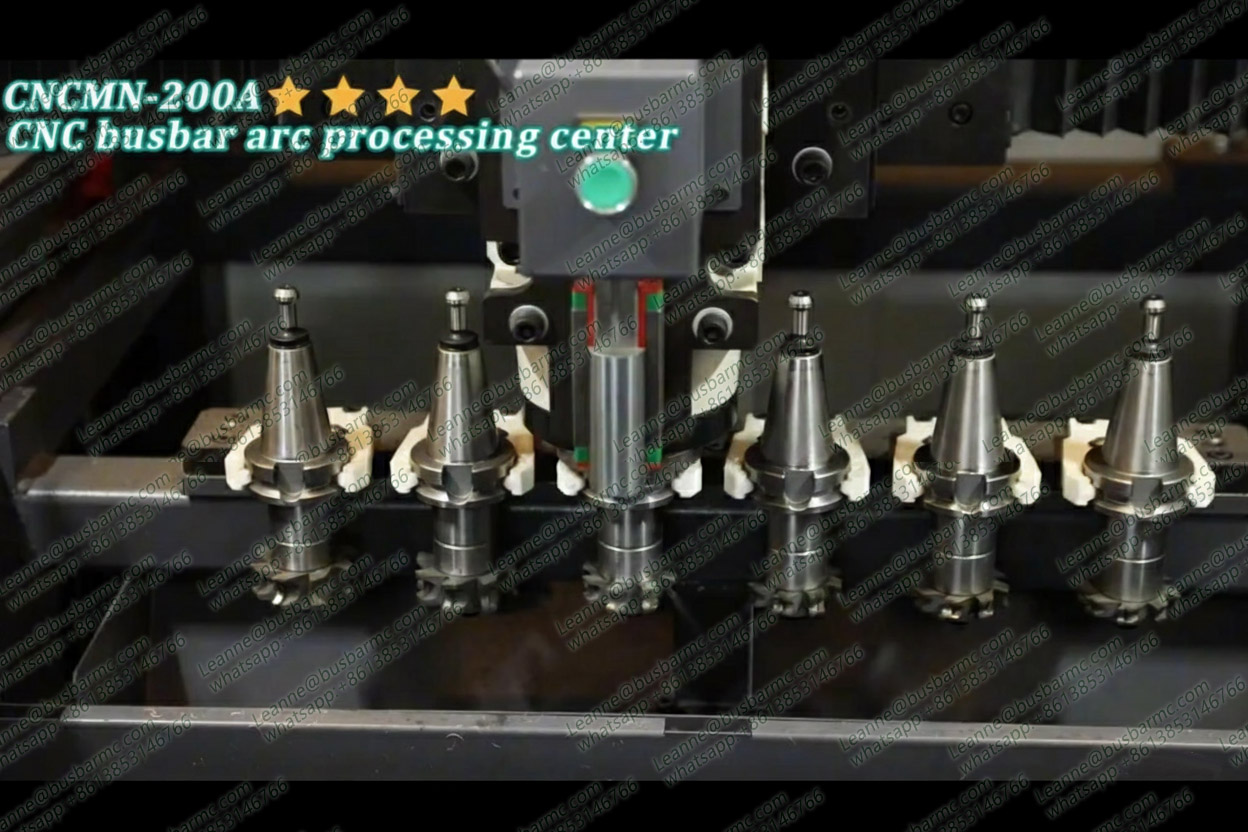
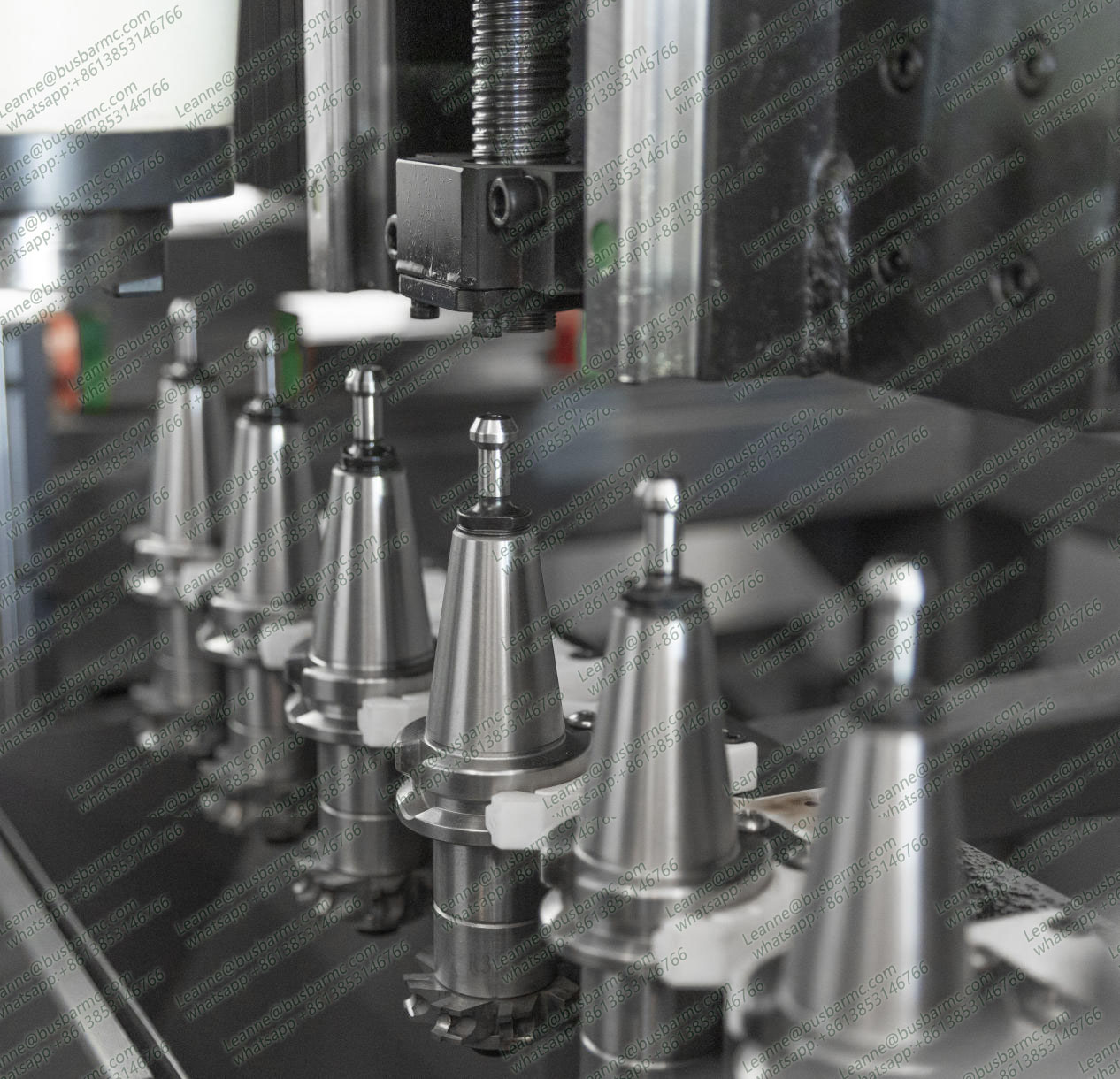
Test condition: tool change between bars of different thickness in the 4 mm to 16 mm range. Value: an in-line magazine with six stations and automatic tool change on BT40 holders. Comparison baseline: a fixed-head milling machine, where every tool change is manual and interrupts the cycle. Effect: moving from thin bar to thick bar stops being a production bottleneck.
Test condition: processing a long bar up to 6,000 mm, with a 525 mm X-axis stroke at 15 m/min. Value: processable length of 150 to 6,000 mm from a single clamping reference. Comparison baseline: end milling of short parts, which requires repositioning and re-datuming. Effect: the ends of long bars come out aligned to each other.
Test condition: installation on a standard industrial floor with compressed air available. Value: 12 kW total installed power — 2 kW per servo on the X and Y axes, 1 kW on the Z axis and 2 kW on the hydraulic pump — with 0.6 to 0.8 MPa air pressure. Comparison baseline: general-purpose machining centres, with far higher power and floor-space demand. Effect: the machine occupies 2,260 × 1,580 × 2,100 mm and runs on a standard industrial supply.
Copper and aluminium bars from 4 to 16 mm thick, 30 to 200 mm wide and 150 to 6,000 mm long.
Five-axis CNC with ±0.08 mm positioning accuracy on the X and Y axes and ±0.05 mm on the Z axis.
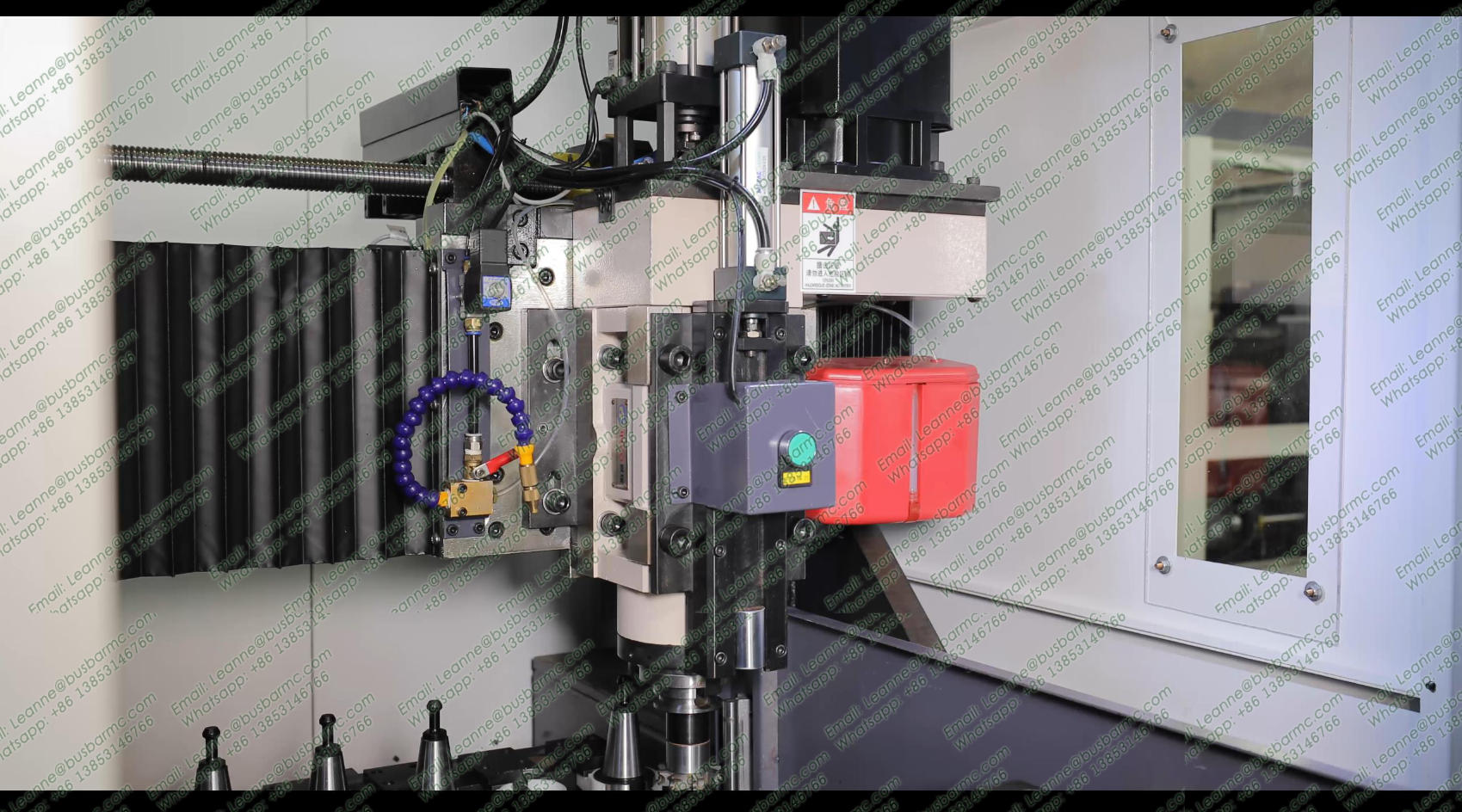
Through a six-station in-line magazine with automatic tool change on BT40 holders, with a 6,000 rpm spindle and a 3.7 kW main motor.
Product :
CNC Busbar Milling Machine
Serial:CNCMN-200A
Main Function:
The main function of the busbar arc machining center is to mill comers (arcs) on the ends of copper
and aluminum busbars.
Main Feature:
It is mainly used for milling comner arcs on busbars with a thickness of 4-16mm, width of 30-200mm, and length of 150-6000mm.
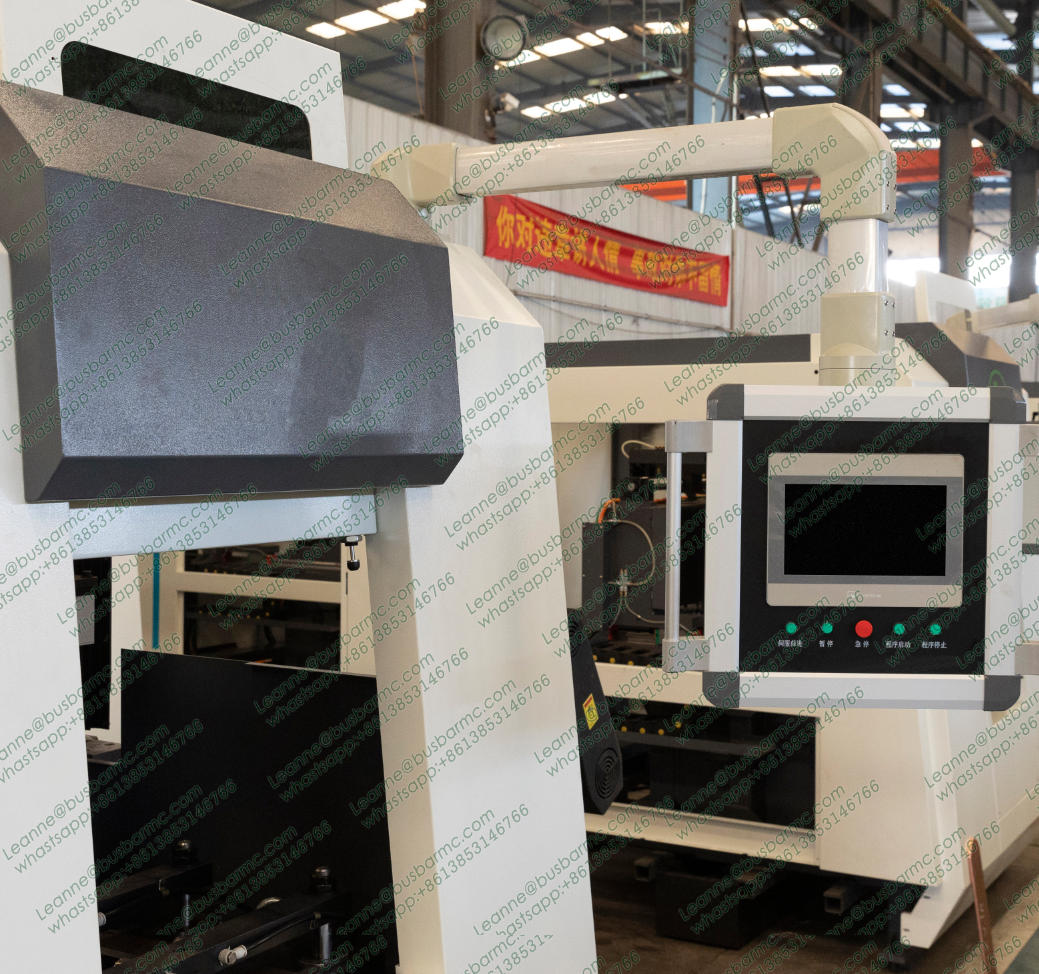
It features a gantry-style structure, simple design, smooth operation, and good structural rigidity.
It is equipped with a six-position inline tool changer, automatically adjusting tool changes based on busbar width.
It features an automatic work hour counter that cannot be reset, along with a production counter that can be reset.
The machine uses BT40 tool holders for easy tool change, high rigidity, and precision.
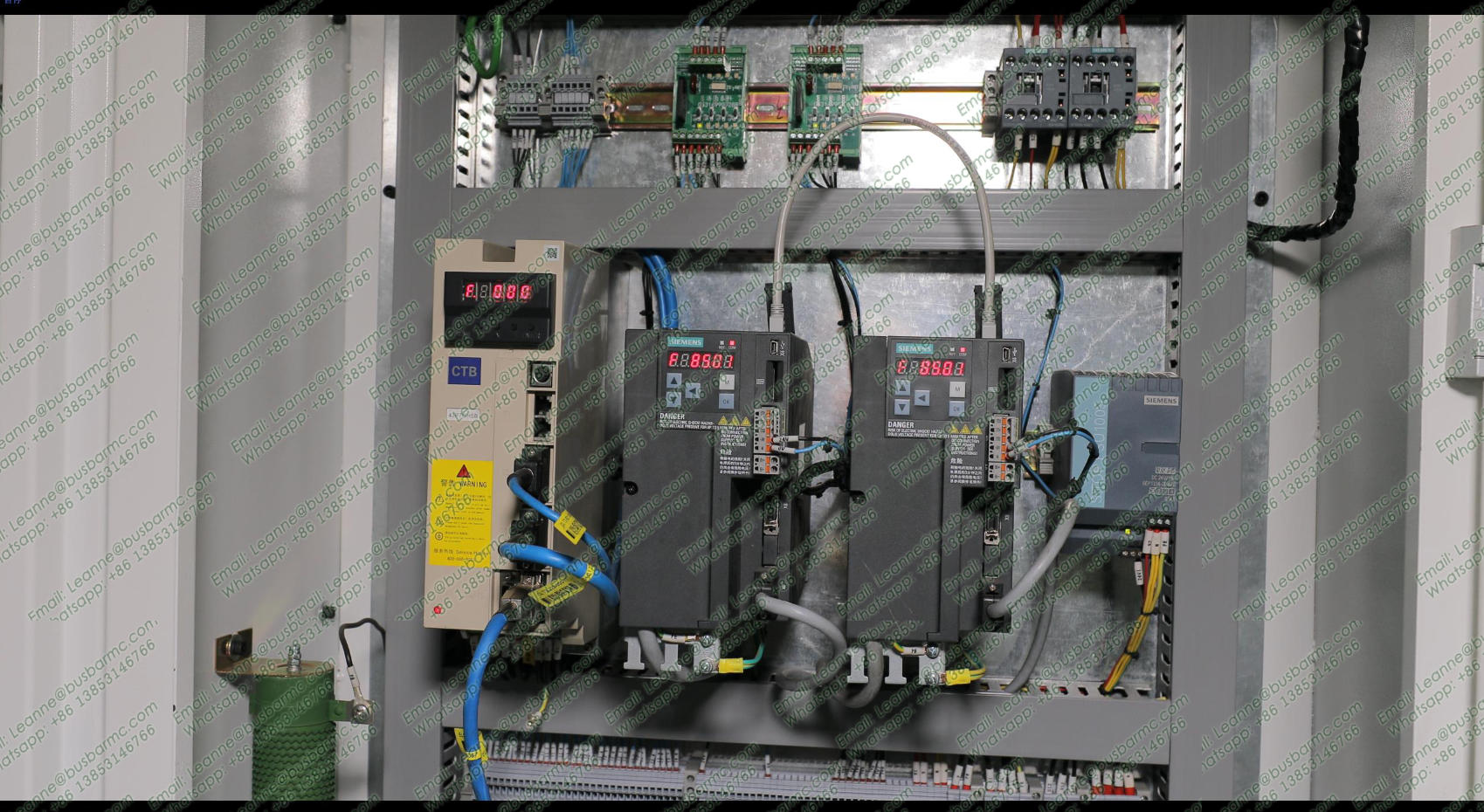
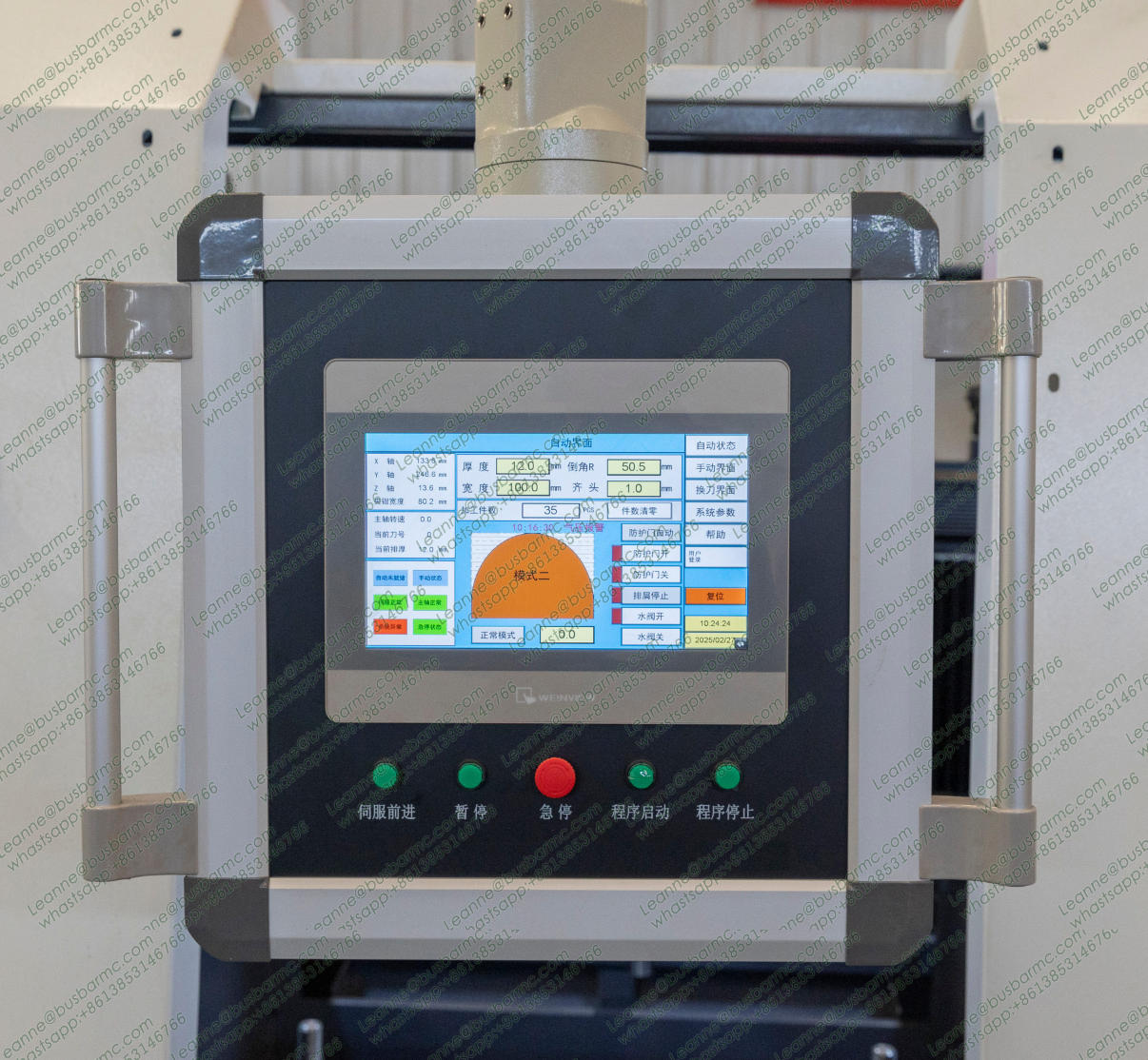
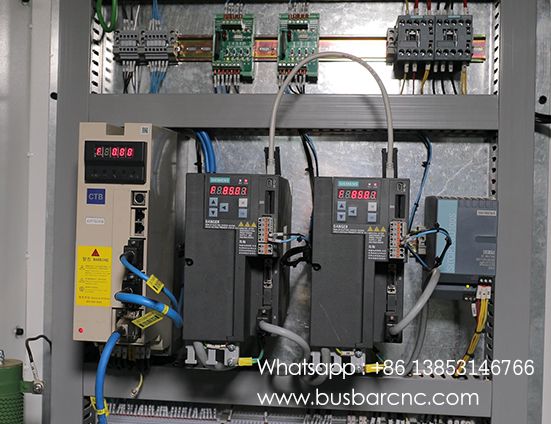
A two-axis CNC system is used, offering simple operation and easy maintenance.
It supports simulated operation and manual online programming.
Technical Parameters:
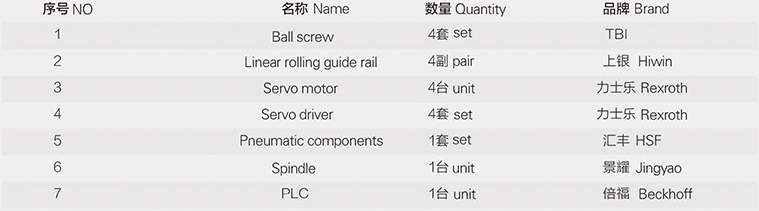
Optional Accessories:
Video/Image: